

For the past twenty-five years, I’ve traveled almost yearly, sometimes twice yearly, to Africa on behalf of our arts and compassion non-profit organization, Ancient Path. So, when I returned to the US after a three-month visit in the fall of 2019, I had no reason to doubt that the following spring would find me back on a plane headed south. But by March 2020, the unthinkable became a daily reality as we locked down, masked up, and stayed put.
The fall of 2021 found me at loose ends, and, still unable to travel to Africa, I decided I might contribute a bit to our income. (Like the rest of our team members here in the US, I don’t take a salary from Ancient Path.) A retail job at a fabric/arts and crafts store – how hard could it be?
After all, I had traveled to and worked in harsh, remote environments – like the Mikea Forest of western Madagascar – where I didn’t know the language, didn’t know the culture, complete with a list of 600 taboos. (How was I supposed to know that pointing my finger or exposing the bottom of my feet was fady and could cost me a couple of goats?) I didn’t have the skills to survive alone, much less contribute to the community.
The Malagasy and Mikea women, gracious as they were, thought me pretty dim. I couldn’t communicate, dig for babo roots, carry bundles on my head hands-free, walk barefoot in scorching sand, or use a short-handled hoe with the requisite power. One day, a man fell down the well we were digging, dislocating his shoulder. When I broke open the instant ice packs I had stuffed in my backpack, the women just shook their heads and began scooping up piles of ox dung. After heating the manure over a fire, they slathered it all over the grateful man’s shoulder and back. Clearly, this is how you treat such an injury in the middle of nowhere – you use what you have, Duh.
It’s not like I have no skills. Over the years, I’ve traveled a bit, seen some, and done some out-of-the-ordinary things. But even if these women had known about my life, my skill set and life experiences held no value for them. Until I learned what I didn’t know, I was useless. Talk about humbling.
Entering the retail workforce, I once again found myself a stranger in a strange land. I didn’t know the language (what’s a POG? What’s a Bopis? A tombstone? A playpen? A power panel?) I didn’t know the culture or the workplace taboos and didn’t have the skills to survive alone, much less contribute to the team. I couldn’t figure out those one-size-fits-noone apron straps, my radio, or my handheld – let alone the cash register. I couldn’t find my way around the massive store and didn’t know what we did or didn’t stock, so helping customers was out of the question. I especially loved when customers asked about yarn, fabric, or baking supplies since I don’t crochet, sew, or bake.
Meanwhile, my co-workers, especially the managers working decades in this industry, knew everything. My only option was to ask stupid questions to those in the know and take my public humiliation with good humor and grace. Not that my co-workers humiliated me; I did that all by myself, daily.
One of the things I didn’t know was how taxing retail work is on the body. As a customer, I’ve never given any thought to how products reach the shelves. I just want them to be there at the price I want, and then I want to check out quickly without delay. That selfish perspective changed when I started unloading trucks every Friday – continuous lifting, bending, sorting, and moving for hours. I was shocked to see how many miles I put in daily; six to eight miles was the norm, but truck day is often over ten miles. And at the end of the day, everything hurts – and that’s just wear and tear on the body, not considering the frequent injuries for those of us who are accident-prone. I am in awe of my managers, who work harder than all of us. These strong women- wives and, moms, aunts and grandmothers – have labored for decades, working through the pain and injuries, enduring surgeries to repair years of damage, and then returning to do it again and again. Respect.
After two years, I’m no longer an outsider or completely clueless. I have learned the job and, more importantly, new things about myself. I have worked in ministry, missions, music, and performing arts for decades – and worked hard. I have followed Jesus to the ends of the earth without question, learning and unlearning so much along the way. But when I followed him to a retail job in the American suburbs, my arrogance, pride, and privilege were painfully exposed. Talking about servanthood is one thing; living it moment by moment, without complaining in the workplace, is another. Talking about unconditional love and kindness is easy; fleshing it out when a customer yells at you is another. (It happens. We’re only human.) Talking about humility is all good; being at the bottom of the ladder, the lowest of the low, who answers to everyone, and anyone who has been there a day longer than you puts feet on it.
For years, I’ve prayed three simple prayers: Open my eyes to see the world the way You see the world.
Break my heart with the things that break your heart. Empty me of everything but love. The last two years have taken me deeper into the heart of these prayers than ever before.
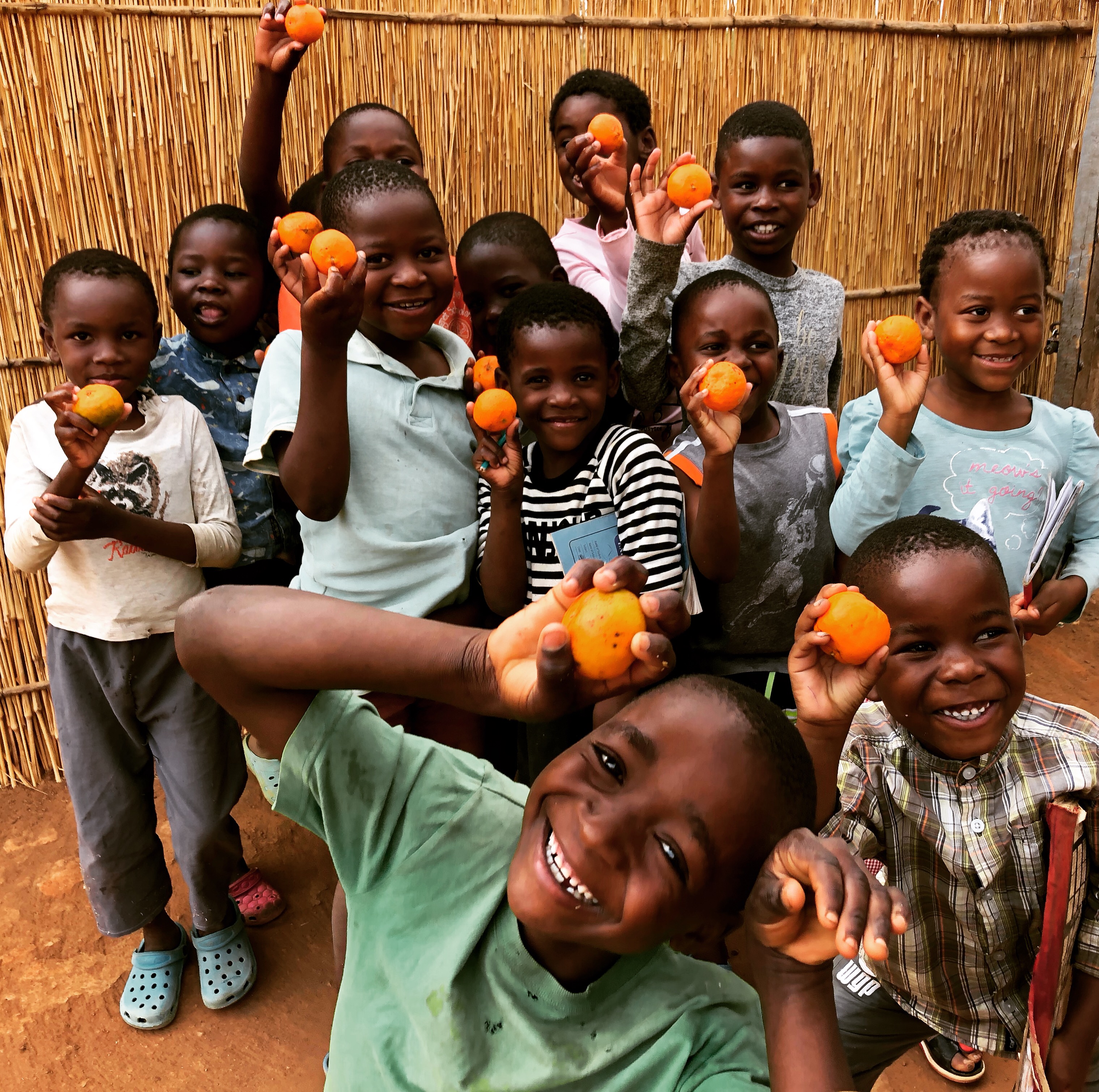
Today, I unloaded my last truck before heading to Malawi next week. It was grueling as usual, but laughter helped. I hugged my co-workers goodbye and thanked them again for all their support and the generous donations of time, talent, and the supplies I’ll take with me. God willing, I’ll be back in November, but now, I’m eager to see my Malawian family after a long hiatus – to hear the music, watch the dance, listen to the stories, talk about God’s love, and learn new things together. I can’t wait!
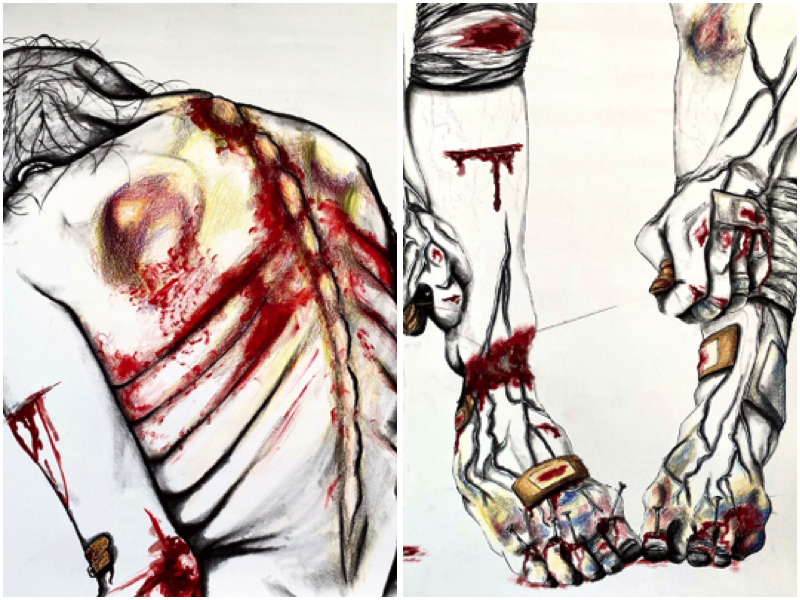
Drawings by Danielle Larson, a student at Cleveland Institute of Arts and my co-worker at Joann’s, from her series entitled I love How My Work Treats My Body and You Should Too! Used by permission.
 Paper Thin Places
You must be logged in to post a comment.